
Ding dong. WorkSafe calling. The unexpected drop-in visitor who can send business owners into a tailspin. But this doesn’t need to be the case. Today I’m talking about making the most of WorkSafe’s input to improve your business, while still managing the risk that comes with their very real regulatory big stick.
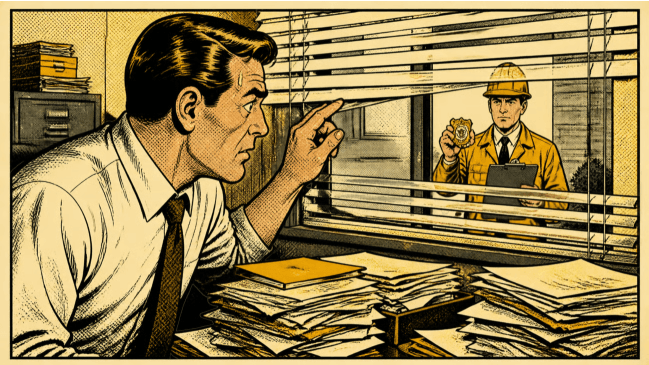
Ding dong, WorkSafe calling
The unexpected drop-in visitor who can send business owners into a tailspin. Queue anxiety about every unfinished thread, the things you meant to follow up on, and that one thing you really hope they don’t ask about.
I get it. There’s a very real big stick attached to that badge. WorkSafe should be taken seriously, as they can pose a significant financial and operational threat to your operations. But if that’s all you see them as, you miss a huge opportunity. In my experience, developing a relationship with WorkSafe inspectors is one of the very few things you can get some government funded service for all that tax you pay as a business…
The trick is understanding who you’re dealing with, why they’re there and what that means for the way you should handle the conversation.
There are some phenomenal people inside WorkSafe
I’ve worked with some incredibly knowledgeable and practical people within WorkSafe. People who understand industry, understand the challenges businesses face and are sensible and pragmatic when it comes to managing risk.
Even the less experience Inspectors have knowledge worth engaging with. They see different workplaces, different approaches and the real, meaningful consequences when controls fail. They can bring a perspective you won’t necessarily get from looking at your own operation every day, because they are on the frontlines when the worst happens. They can bring the sorts of stories that shift your teams’ perspectives.
If your only focus when WorkSafe comes knocking is to get them out the door as quickly as possible, you can miss that gold.
What does reasonably practicable actually look like
Safety is rarely black and white, it’s usually 50 shades of grey, and a big part of managing the murkiness is working out what is reasonably practicable in your circumstances.
What could hurt someone? How badly? What do we know about it? What options are available to prevent it? Which controls could be used?
None of these questions are linear, they involve reasoning, insight and judgement. There isn’t always a neat instruction telling you exactly what your business needs to do, despite what AI might tell you.
If we are unsure of something, one useful way to test our own judgement is to talk through our approach with WorkSafe. Explain the risk, the options you’ve considered, what you’ve put in place and why. Having an inspector understand your reasoning and endorse your approach can lift a weight and give you confidence in the way forward. Conversely, if you’ve missed anything, it can help pick that up too.
Know who you are talking to
WorkSafe inspectors are, in essence, the safety police. They can be helpful, knowledgeable and easy to talk to BUT they also have powers to inspect, investigate and take enforcement action. They’re the ones who wield the big safety baton that can see you with large fines, or under prosecution.
So yes, be open and work on a constructive relationship with them. Be honest, respect what they’re there to do and work with them. Bullshitting them, being evasive or making their job harder will undermine trust pretty quickly and won’t do you any favours.
But at the same time, be deliberate about what you say and share. Tell them what you know and be honest if you need to check something. Don’t fill the silence with guesses or make something up because you think it’s what they want to hear.
The easiest way I can put it is this: approach the relationship professionally, don’t confuse them with your mate at the pub. There are some awesome inspectors who genuinely want to help businesses be better. But don’t lose sight of their role as an arm of the regulator. What they see, what you say and what you provide can become evidence, now or in the future.
You can be friendly and cooperative while still being mindful of that boundary.
Consider the relationship before something goes wrong
There can be real value in engaging proactively with the regulator. To invite them into your space to understand your operation and your approach. Your industry may be completely foreign to inspectors, and giving them a real-life, warts-and-all look under the hood can help them understand the practical challenges, why you’ve made certain decisions and what managing the risks actually looks like in your industry.
But I wouldn’t give every business a blanket instruction to ring up and invite an inspector in. This is where having someone from my team alongside you can help. We can work through where things are at, what needs attention first and what you want to get out of the conversation. We can also help you explain your approach and work through any questions or actions that come out of the visit.
You don’t need everything in perfect order before engaging with WorkSafe. You do need to understand the big things that could seriously hurt people and how you’re preventing that harm. Start the ball rolling on proactively building a relationship with the regulatory once you can put your hand on your heart and say, “We understand our big hitting risks, we know what we need to work on and we’re actively doing that.". If you would like to chat about getting your house in order, you can book a free strategy call with me here.