
The NZ safety case Australian leaders need to pay attention to
A recent New Zealand safety case has important lessons for Australian CEOs, directors and senior leaders. The Gibson v Maritime New Zealand decision is a stark reminder that having processes on paper is not enough. Leaders need to understand whether they are followed and working in the real operating conditions where the work happens. If you aren’t aware of this case, you need to be.
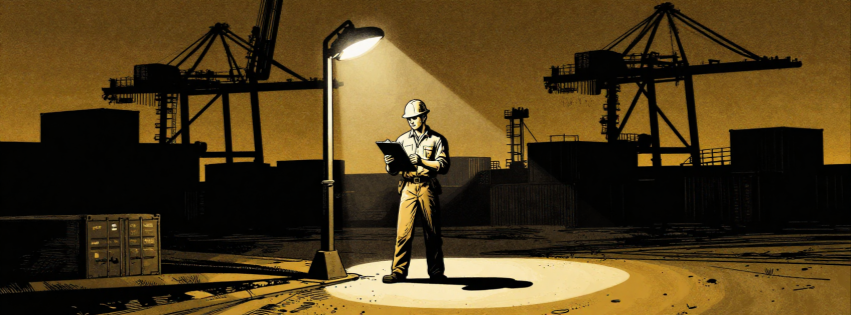

There is a recent New Zealand safety case that Australian directors, executives and senior leaders need to have on their radar.
Not because New Zealand law applies here. It does not.
But because their health and safety legislation is cut from the same cloth as ours. Different country, different Act, but a very similar approach: businesses have duties, officers have duties, and leaders are expected to exercise due diligence. In fact, Hamilton Locke notes that New Zealand’s officer due diligence duty mirrors section 27 of Australia’s Model WHS Act.
The moral of the story from this case is simple:
Senior leaders cannot just assume WHS is working because their paperwork says it is
The case is Gibson v Maritime New Zealand. The New Zealand High Court upheld the conviction and sentence of Tony Gibson, former CEO of Ports of Auckland, for failing to exercise due diligence under New Zealand’s Health and Safety at Work Act. The case followed the death of stevedore Pala’amo Kalati, who was killed when a shipping container fell during lashing work.
The key point for leaders is this:
Systems are not enough.
It is not enough to say:
“We had a procedure.”
“We had training.”
“We had a rule.”
“We had people responsible for that.”
In this case, the Court found that Mr Gibson was personally aware of the critical risks involved in stevedoring and handling loads. It also found that Ports of Auckland’s training materials and documentation about exclusion zones were confusing and inconsistent, and that performance monitoring wasn’t detecting risky behaviour, particularly on night shifts.
The legal learning here is not that officers, or business leaders, need to personally manage every operational detail. They do not.
The point is that senior leaders cannot just rely on the fact that a system exists, or that someone has told them everything is under control.
They need to ask better questions.
Not to micromanage. Not to do the safety manager’s job. But to understand whether the critical controls are actually clear, practical, used and checked in the places where the risk exists.
Because a rule written in a document does not protect anyone if it is confusing, inconsistently applied, or not followed when the work is actually happening.
The unspoken risks of night shift
Let’s go back to the night shift.
The night shift point matters.
Because this is such a classic operational risk pattern.
Work can look one way during the day, when there are more eyes on the job, more leaders around, more support available and more formal oversight. But night shift, or work that happens away from base and away from management, can be a very different operating environment.
Not because night shift or remote workers are careless. That is not the point.
In my experience, night shift workers are often some of the most deeply committed people in a business. Heck, they sacrifice their sleep to get the job done. Some of the best operators I have worked with have been night shift workers. They know the work. They care about keeping things moving. They often carry a huge amount of operational responsibility with far less visibility and support than the day shift gets.
But we need to be conscious that night shift has a different rhythm.
There are fewer people around. There are fewer leaders on site. There is less immediate support. The normal checks and balances can be thinner.
And the work itself can carry a different pressure.
Night shift is often responsible for mopping up the dregs of the day. Finishing what did not get finished. Resetting the operation. Making sure the business is ready to run efficiently the next morning.
That can create a highly pressured operating environment, but one where supervision and senior attention are often much lower.
So the risk profile changes.
Not because the people are worse.
But because the context is different. We have to factor that into our risk planning. Because a control that looks effective during the day, when the site is fully staffed and leaders are visible, may not work the same way at 2am when the crew is under pressure, support is limited and the priority is getting the operation back on track.
Why this case matters
It is a reminder that leaders cannot just ask whether a control exists.
We must ask whether the rule is understood, followed and practical in the real operating conditions where the work is happening. Not just, “do we have a rule?”, but:
Does it work at 2am?
Does it work when supervision is lower?
Does it work when production pressure is high?
Does it work when people are away from base?
Does it work when the work is messy?
That is the bit all leaders need to sit with.
Because this is not just about having controls in place. It is about whether you know those controls are understood, used, monitored and working in the messy reality of the job. You can find the court transcript here, and a useful legal summary here.