AI Can Write the Procedure. It Can’t Understand the Work
AI can write the procedure, but it can't read the room. Here's why judgement — not just documentation — is still what keeps workplaces safe.
Someone asked me the other day if I was worried that AI would take my job or derail my business.
Short answer, no. I’m not.
I use AI heavily. It can research legislation, codes, guidance material and regulator websites faster than I ever could manually. It can summarise, compare, draft and organise information incredibly well. Why would I not use that? It is brilliant. It has changed my life.
But AI can only take you so far.
It can help with the compliance layer. It can find the “rules”, summarise the obligations, scan for potential controls and speed up the drafting of documents. But it cannot replace judgement. And honestly, it can spit out some bloody shit “Safety Documents” if the person using it does not know what they are doing.
Because good WHS is not just words arranged neatly on a page. It has to reflect the work, the people, the operating rhythm, the risk profile, the maturity of the business, the leadership capability and the way decisions are actually made under pressure.
AI cannot hold all that context on its own.
It does not hold a candle to a human being on that front. Not because we can type faster, generate ideas faster or produce content faster than AI. Obviously, we can’t.
It can’t compete with us because this work requires judgement. It requires emotional intelligence, operational understanding and the ability to read what is happening beneath the surface.
It requires knowing when a document is technically correct but practically useless. When a control looks good on paper but will fail in the real operating environment. When the issue is not the procedure, but the leadership capability, production pressure, communication gap or culture sitting underneath it.
That kind of work does not come from pattern recognition alone.
It comes from experience.
It comes from being human.
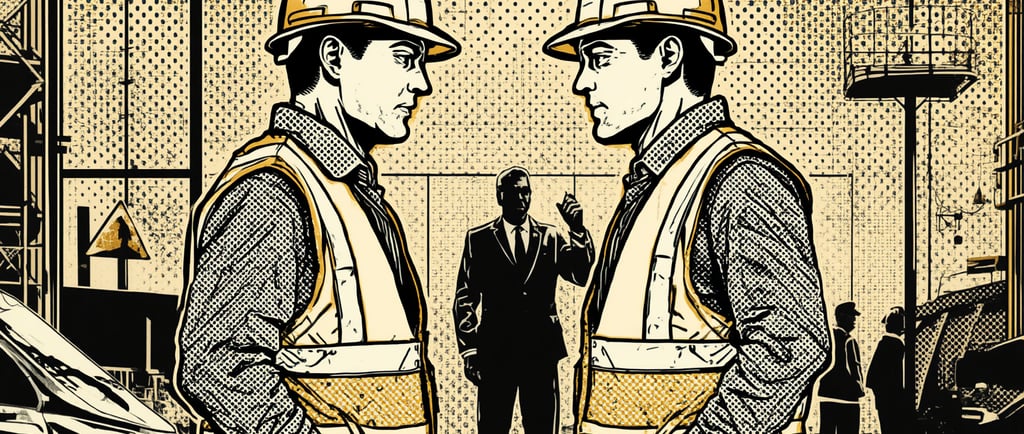
AI cannot walk into a workplace and feel the hesitation in a room. It can’t notice the silent glance between two workers when a supervisor says, “Safety is my top priority.” It can’t see the difference between what the procedure says and what people do when production pressure hits. It can’t feel the unspoken tension between a manager and their supervisors. It can’t sit across from a leader, hear the hesitation in their answer, and know whether to push, pause or change the way the question is being asked.
Please don’t get me wrong. I am incredibly excited about what AI can do, and the role it will play in safety in the future. As I said, I am already using it extensively in our work and loving the support it provides.
AI is not just a glorified copywriter, either. There is already technology being used to monitor safe and risky behaviours, identify patterns, detect control drift and give leaders better visibility over high risk work.
That is genuinely exciting.
But the point remains the same.
The tool is only as useful as the judgement behind it.
AI can help us see more, pickup patterns and risks faster and organise information better.
But it still needs human judgement.
It needs people who understand not just the law, but the reality of how the law is applied. Humans who understand the work, the risk, the context and the culture well enough to ask better questions, make sense of what AI produces, and challenge it when something is off.
Because AI can give you an answer.
But it cannot, on its own, give you a nuanced and balanced response that weighs up culture, operational risk, business risk, legal exposure, leadership capability and the reality of how the work is done.
And to be clear, that is not something any person can do perfectly either.
But that is the conundrum of safety. It is never perfect.
The work is in holding those competing realities together, asking the right questions, challenging assumptions, and making a considered judgement about what will actually work in the business in front of you.